Sushi Menu Photos: Show the Roll, Rice, and Piece Count
Accurate sushi menu photography requires showing the exact roll identity, distinct rice grain structure, natural seafood color, and the precise piece count delivered to the customer. When diners evaluate sushi on an online menu or delivery platform, visual clarity directly establishes their expectations for freshness, portion size, and ingredient balance. Presenting an elaborate twelve-piece platter for a standard six-piece roll, or blowing out highlights so seasoned rice resembles a white paste, can give the wrong impression of the portion.
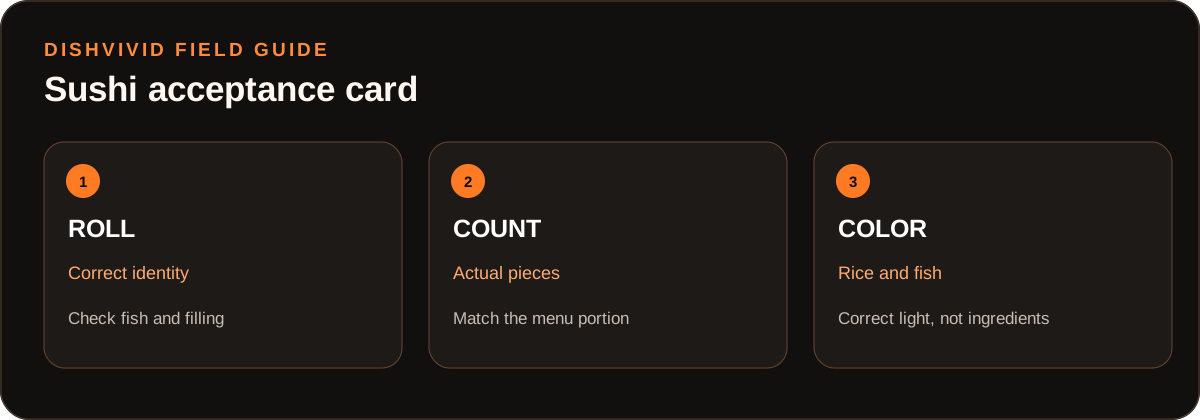
Editorial diagram for planning; it is not a customer photo or measured result.
Achieving visual accuracy in sushi photography does not require high-end commercial sets, but it requires strict alignment with kitchen build specifications. By standardizing camera angles, lighting positions, and plating standards, operators ensure that digital menu images serve as reliable representations of the meals leaving the sushi bar.
The Four Pillars of Sushi Photo Accuracy
Capturing sushi effectively requires balancing delicate textures and geometric consistency. To ensure each image remains true to service, operators should evaluate four specific visual checkpoints:
- Roll Identity and Cross-Section: The face of a cut roll must clearly display interior fillings. Diners must be able to differentiate minced seafood blends from solid cut fillets, verify vegetable proportions, and see whether the roll contains nori on the exterior or interior (uramaki).
- Rice Grain Separation: Well-seasoned sushi rice consists of individual, seasoned grains with a delicate surface sheen. Harsh overhead light washes out this texture into a solid, unappetizing white mass. Controlled lighting must preserve subtle grain boundaries.
- Natural Fish Tone and Surface Texture: Raw seafood has a specific luster and natural grain. Excessive digital saturation or aggressive warmth filters distort species identity, making farmed Atlantic salmon look fluorescent or yellowfin tuna appear artificially dyed.
- Exact Piece Count: The number of pieces displayed in a menu item image must match the recipe card and online item description exactly. If an order delivers six pieces, the photo must present precisely six pieces.
The Sushi Photo Acceptance Matrix
Differentiating menu items requires standardized visual criteria based on sushi format. The following matrix outlines the core requirements for individual orders, preventing deceptive compositions.
Editorial Illustration: DishVivid Sushi Photo Acceptance Matrix
| Menu Format | Target Composition & Piece Count | Critical Visual Checkpoints | Disqualifying Visual Errors |
|---|---|---|---|
| Nigiri Order | Typically 2 pieces per single item listing. | Clear drape of the fish over the rice ball (shari); visible fish cut texture and delicate glaze. | Showing a 6- or 8-piece assorted nigiri board on a single-item listing; obscuring the rice proportion. |
| Traditional Maki (Hosomaki) | Standard 6-piece uniform cylinder with nori on the outside. | Crisp outer nori wrap; neat, centered single filling (e.g., tuna or cucumber); clean slice faces. | Torn or soggy nori; uneven piece widths; displaying 8 pieces when standard yield is 6. |
| Specialty Cut Roll (Uramaki) | Standard 6- or 8-piece roll with rice or exterior toppings outside. | Clear balance of exterior toppings (e.g., sesame seeds, tobiko, or sliced fish) and internal proteins. | End pieces arranged to obscure small core fillings; omitting stated sauces or garnishes. |
| Sushi Combo / Set Platter | Exact piece count itemized in the menu description. | Organized layout showing every component clearly; clean separation between rolls and nigiri. | Adding extra decorative pieces, unlisted side salads, or garnishes not included in the boxed meal. |
A 4-Step Practical Sequence for Sushi Capture
To produce clean, compliant photos during daily kitchen operations, follow this sequential capture process:
- Plate to Standard Service Specifications: Prepare the dish using standard kitchen tableware or delivery packaging. Do not double protein portions, add extra avocado slices, or introduce decorative garnishes that line cooks do not include during service.
- Set Diffused Side Lighting: Position a single diffuse light source from the side or slightly behind the dish at a 45-degree angle. This glancing illumination catches the edges of individual rice grains and highlights the natural glaze of fresh fish without casting harsh specular reflections.
- Select a Functional Capture Angle: Shoot at an angle between 30 and 45 degrees. A flat 90-degree overhead angle hides the height of nigiri and obscures roll fillings, while a low zero-degree angle hides the total piece count. A 35-degree perspective captures both the cut faces and the total quantity on the plate.
- Perform Exposure and Crop Review: Check the image against the physical dish. Operators can use DishVivid Studio to crop framing to standard menu aspect ratios and fine-tune exposure or contrast so rice highlights remain detailed rather than clipped. Never use generative editing to invent missing garnishes or expand roll diameter.
Illustrative Worked Example (Hypothetical Menu Item)
Consider a neighborhood Japanese restaurant updating its delivery catalog:
- Menu Title: Salmon Avocado Roll (6 pcs)
- Description: Fresh Atlantic salmon and avocado, wrapped with seasoned sushi rice and toasted nori, topped with toasted sesame seeds.
- The Common Capture Error: The operator arranges the six-piece roll on a bamboo platter alongside two complimentary pieces of tuna nigiri and a small bowl of edamame to make the shot look abundant. Customers order the roll expecting a sampler, resulting in complaints when only six cut pieces arrive.
- The Accurate Method: The operator plates exactly six cut pieces on a neutral, single-portion ceramic plate. The roll is arranged in a gentle stagger so the cut faces of the front four pieces clearly show the salmon-to-avocado ratio, while the two end pieces are visible in the background. The final image verifies that the order includes six pieces, standard nori, and light sesame seeds, directly matching kitchen output.
Platform Standards and Operational Trade-Offs
Online delivery and ordering platforms enforce strict policies regarding food depiction. As outlined in the Uber Eats Restaurant-Submitted Menu Photo Guidelines, submitted images must accurately represent the single item being purchased, remain in sharp focus, and avoid props, excessive styling, or items that are not part of the standard order.
Maintaining visual accuracy introduces clear operational trade-offs:
- Abundance vs. Compliance: Elaborate platters featuring props, unlisted side sauces, and complimentary snacks attract attention, but they generate negative reviews when guests discover those additions are not included. Clean, single-item photos prevent customer dissatisfaction.
- Speed vs. Lighting Quality: Snapping a quick shot under warm kitchen heat lamps takes seconds, but heat lamps cast orange color casts that make raw fish appear aged and cause rice highlights to blow out. Taking three minutes to move the plate near indirect daylight or a dedicated diffuse light preserves true food coloring.
For broader insights on food image governance and platform requirements, explore the DishVivid photography hub.
Common Failure Modes in Sushi Photography
- Rice Highlight Clipping: Setting camera exposure too high causes the camera sensor to blow out white values, merging individual sushi rice grains into an untextured solid white patch.
- Over-Saturation of Proteins: Applying automated filters to heighten visual impact turns tuna deep magenta and salmon bright orange, setting an unrealistic visual standard that real fish cannot meet.
- Obscuring Fillings: Photographing a cut roll entirely from its uncut side displays only black nori or exterior rice, preventing the customer from evaluating protein quantity.
- Hiding Real Packaging: Presenting an elaborate dine-in stone platter for an item sold exclusively through takeout creates mismatched expectations regarding container volume and delivery presentation.
Pre-Publishing Sushi Photo Checklist
Before uploading an image to your point of sale or delivery menu, verify each point:
- Does the photograph feature only the item listed in the menu title?
- Is the visible piece count identical to the actual quantity served?
- Are individual rice grains distinct without overexposed white blowouts?
- Are protein and vegetable cut faces clearly visible to confirm freshness and ratio?
- Have unlisted garnishes, complimentary sides, and decorative platters been excluded?
- Does the overall color palette match the natural appearance of the fish under neutral light?